

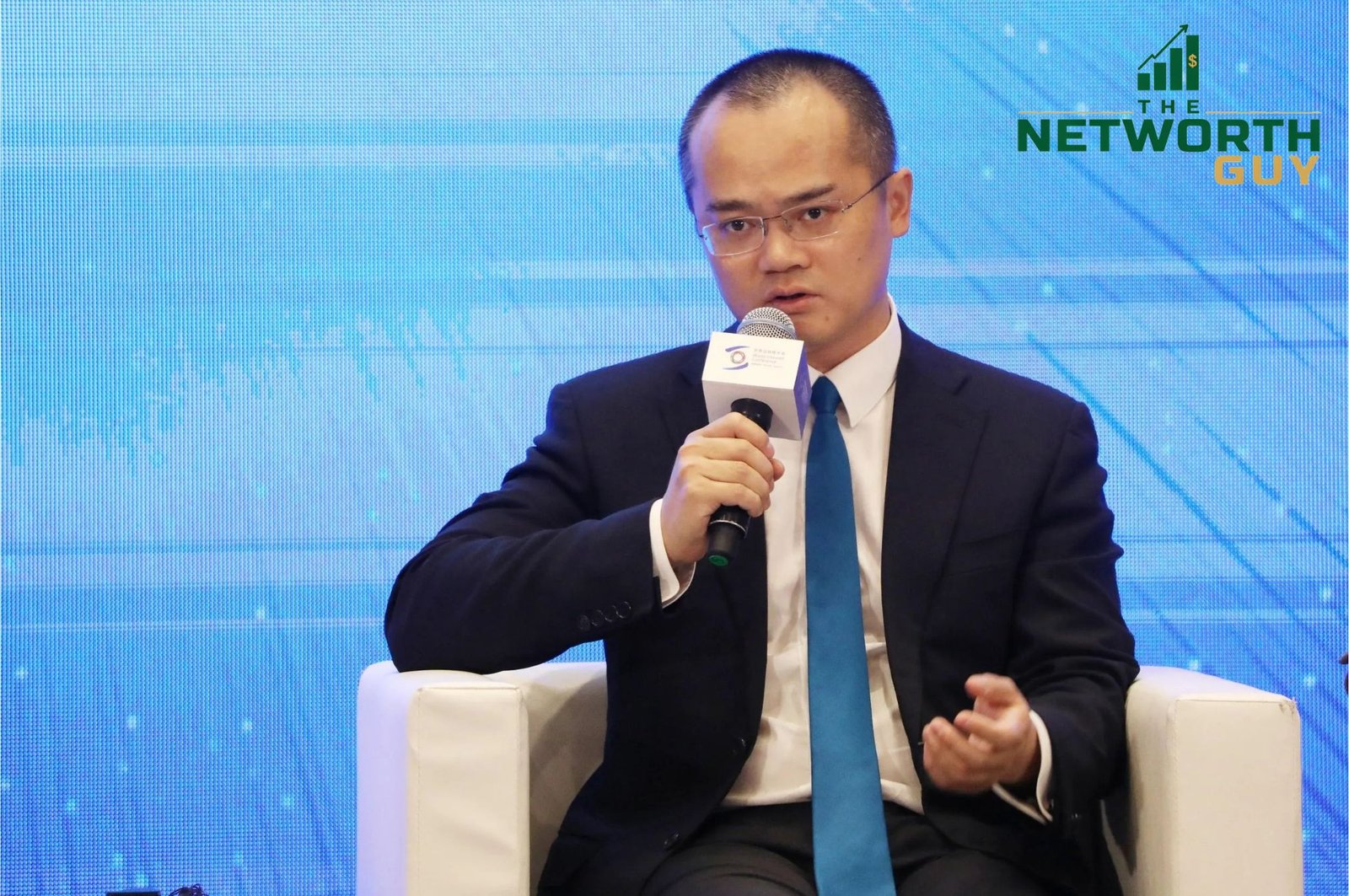
Introduction
Wang Xing net worth is estimated at $7.5 billion in 2026, according to Forbes’ real-time billionaire data. The Chinese entrepreneur built most of his wealth through Meituan, the Hong Kong-listed technology and local-commerce company he co-founded in 2010. Forbes identifies him as Meituan’s chairman and CEO and lists food delivery and self-made entrepreneurship as his primary sources of wealth.
But Wang Xing’s rise did not begin with Meituan. Before creating one of China’s largest consumer-service platforms, he experimented with several internet businesses, including Xiaonei and Fanfou. Those ventures gave him experience in social networking, consumer technology and online communities that later influenced his approach to Meituan.
His story is therefore less about one successful startup and more about a long process of experimentation, failure, adaptation and eventually building a technology company with enormous scale.
Quick Facts About Wang Xing
| Fact | Details |
|---|---|
| Full Name | Wang Xing |
| Birth Date | February 18, 1979 |
| Age | 47 |
| Birthplace | Longyan, Fujian, China |
| Nationality | Chinese |
| Profession | Entrepreneur, Technology Executive |
| Known For | Co-founder, Chairman and CEO of Meituan |
| Estimated Net Worth | $7.5 billion |
| Source of Wealth | Meituan equity, technology entrepreneurship |
| Education | Tsinghua University; University of Delaware |
| Residence | Beijing, China |
| Marital Status | Private / not reliably disclosed |
Forbes’ real-time profile lists Wang Xing at approximately $7.5 billion as of August 17, 2026. His fortune can change significantly because much of his wealth is linked to Meituan and therefore fluctuates with the company’s market value.
Wang Xing Net Worth in 2026
As of August 17, 2026, Forbes estimates Wang Xing’s real-time net worth at approximately $7.5 billion. Forbes ranks him among the world’s billionaires and identifies Meituan equity as the central source of his fortune.
It is important to understand that this figure is an estimate of wealth, not the amount of cash Wang Xing has in a bank account.
A large portion of his wealth is connected to his ownership interest in Meituan. Consequently, changes in Meituan’s share price can add or subtract hundreds of millions of dollars from his estimated fortune without Wang Xing necessarily selling any shares.
Why Different Websites Give Different Net Worth Figures
Wang Xing’s net worth can look dramatically different across financial websites because the sources may use different:
- Valuation dates
- Share prices
- Ownership records
- Exchange-rate assumptions
- Treatment of transferred shares
- Methodologies for calculating private assets
This is especially important when comparing Forbes with automated financial databases.
For example, GuruFocus currently calculates more than $45 billion for a Wang Xing based on 515,869,783 Meituan shares and a price displayed on its page. However, GuruFocus itself says the ownership information dates back to May 29, 2023 and warns that its estimate may not reflect actual current net worth.
Therefore, that $45 billion figure should not be presented as Wang Xing’s actual personal fortune.
For a current celebrity-net-worth article, the more defensible approach is to use the dated Forbes estimate while explaining why estimates vary.
How Wang Xing Makes His Money
Wang Xing’s wealth is fundamentally different from the income profile of an actor, singer or social-media celebrity. His fortune is primarily connected to business ownership and equity, especially his stake in Meituan.
Meituan Equity
The biggest driver of Wang Xing’s wealth is his ownership interest in Meituan.
Meituan is a major Chinese technology platform covering services such as food delivery, in-store consumption, hotels and travel, retail and other local-commerce activities.
Forbes identifies Meituan as the principal source of Wang Xing’s fortune.
Executive Compensation
Wang Xing also earns compensation through his leadership role at Meituan, where he serves as chairman and CEO.
However, his billionaire status should not be attributed to his salary. For founders of publicly traded companies, the market value of their equity can be substantially more important than annual executive compensation.
Food Delivery
Food delivery is one of Meituan’s most recognizable businesses and remains a central part of its consumer ecosystem.
Restaurants use Meituan to reach customers, while consumers use the platform to order meals and access other local services.
Local Commerce
Meituan has expanded far beyond its original group-buying concept.
Its ecosystem connects consumers with merchants across categories including restaurants, hotels, travel, entertainment, retail and other local services.
That transformation is central to understanding Wang Xing’s wealth. He did not become a billionaire simply because Meituan delivers food; he built an extensive local-commerce technology platform.
Retail and New Businesses
Meituan has continued expanding into instant retail, logistics, technology and other emerging areas.
The company’s official investor-relations materials show continued reporting and investment activity through 2026, including first-quarter 2026 results.
Investments
Wang Xing has also been associated with investments and financial interests outside the basic Meituan operating business.
However, personal investment claims should be treated cautiously unless they can be connected to reliable corporate disclosures. Automated databases can sometimes attribute securities to individuals with identical or similar names.
For that reason, this article does not inflate Wang Xing’s net worth by adding unverified investment holdings.
Early Life and Education
Wang Xing was born on February 18, 1979, in Longyan, Fujian, China.
He attended Tsinghua University, where he earned a bachelor’s degree in electronic engineering. He later studied computer engineering at the University of Delaware, earning a master’s degree. Forbes confirms both institutions in his personal profile.
His engineering background became an important part of his entrepreneurial career.
Rather than entering a conventional corporate career, Wang became interested in the rapidly developing internet economy and began experimenting with online products.
That decision eventually led him through several startups before Meituan became his defining business.
Wang Xing’s Career Journey
2001 — Graduated From Tsinghua University
Wang completed his undergraduate education in electronic engineering at Tsinghua University.
His technical education gave him a foundation in computing and engineering before he moved deeper into entrepreneurship.
Early 2000s — Moved Into Internet Entrepreneurship
After studying in the United States, Wang returned to China and began experimenting with internet businesses.
His early projects did not achieve the scale of Meituan, but they helped him learn how Chinese consumers interacted with emerging online platforms.
2005 — Co-Founded Xiaonei
Wang co-founded Xiaonei, a social-networking platform focused heavily on Chinese university students.
The platform became one of the early major social networks in China’s internet market and was later sold to Oak Pacific Interactive in 2006. Forbes identifies Xiaonei as one of Wang’s important early entrepreneurial milestones.
2007 — Founded Fanfou
Wang later founded Fanfou, a Chinese microblogging service.
Fanfou became notable for its Twitter-like format and reflected Wang’s continued interest in social media and online communication.
PanDaily’s profile of Wang describes him as a technology entrepreneur with a strong interest in literature, poetry and internet culture.
2009 — Fanfou Shut Down Temporarily
Fanfou was temporarily shut down during a period of heightened regulatory restrictions on online platforms.
The experience became another important chapter in Wang’s entrepreneurial career.
2010 — Founded Meituan
Wang Xing co-founded Meituan in 2010.
The company initially operated around the group-buying model that was popular in China at the time.
Forbes described early Meituan as a Chinese answer to Groupon before the company evolved into a much broader consumer-services platform.
2015 — Meituan and Dianping Merged
One of the most important milestones in Wang Xing’s career came in 2015, when Meituan merged with Dianping.
The merger combined Meituan’s group-buying and food-delivery operations with Dianping’s restaurant reviews, local listings and consumer-services capabilities.
Forbes identifies the 2015 merger as the event that created the modern Meituan structure.
2018 — Meituan Went Public
Meituan completed its initial public offering on the Hong Kong Stock Exchange in 2018.
The listing was a major turning point because it provided public-market investors with a way to value the business and created a clearer link between Meituan’s performance and Wang Xing’s personal wealth.
2021 — Major Philanthropic Share Transfer
In 2021, Wang Xing transferred Meituan shares worth more than $2 billion at the time to his philanthropic foundation.
Forbes reported the transaction at approximately $2.3 billion.
This transaction is important when calculating his wealth history because shares transferred to a foundation should not simply be treated as money Wang Xing personally spent.
2025–2026 — Meituan Enters a New Competitive Phase
Meituan has continued operating in an increasingly competitive Chinese technology and consumer-services market.
Forbes reported in August 2025 that Wang’s wealth fell by about $1.1 billion during trading as competition in food delivery intensified.
Meituan’s investor-relations platform also shows continued financial reporting through 2026, demonstrating that the company remains in an active phase of expansion and investment.
Major Achievements
Wang Xing’s most significant achievements include:
- Co-founding Xiaonei, an early Chinese university social network.
- Founding Fanfou, an early Chinese microblogging platform.
- Launching Meituan in 2010.
- Leading Meituan through its 2015 merger with Dianping.
- Taking Meituan public in Hong Kong in 2018.
- Building Meituan from a group-buying startup into a broad local-commerce platform.
- Expanding Meituan beyond food delivery into multiple consumer-service categories.
- Establishing himself as one of China’s best-known technology entrepreneurs.
- Transferring a major Meituan shareholding to a philanthropic foundation in 2021.
Wang Xing’s Business Strategy
One of the most interesting parts of Wang Xing’s career is his ability to change business models without abandoning the underlying technology platform.
Meituan began with group buying.
It then expanded into:
Restaurant discovery → group deals → food delivery → hotel and travel services → local commerce → retail and technology
That evolution helped turn Meituan from a Groupon-style startup into a much broader consumer platform.
This is also why simply calling Wang Xing the “founder of a food-delivery company” understates his business achievement.
His larger contribution has been building an ecosystem that connects consumers, merchants, delivery workers and local businesses through a single technology platform.
Assets and Lifestyle
Wang Xing’s public profile is relatively business-focused.
Forbes lists his residence as Beijing, China and identifies China as his citizenship.
Unlike some globally famous billionaires, there is comparatively little reliable public reporting about his private collection of luxury homes, yachts, aircraft or other high-value lifestyle assets.
That means it would be misleading to create a long list of expensive possessions without reliable documentation.
The most significant asset associated with Wang Xing’s wealth is his Meituan equity, not a publicly documented collection of luxury goods.
Personal Life
Wang Xing keeps much of his private life away from the public spotlight.
Reliable sources provide extensive information about his education, companies and entrepreneurial career but considerably less verified information about his spouse, children and private family activities.
For that reason, claims about his marital status or family should be treated carefully unless supported by a credible source.
What is better documented is his intellectual side.
Wang has developed a reputation for interest in literature, poetry, technology and history, which is why profiles such as PanDaily’s have referred to him as a “poet entrepreneur.”
Wang Xing Net Worth Growth Timeline
| Year | Wealth / Major Event | Main Wealth Driver |
|---|---|---|
| 2005 | Xiaonei launched | Early entrepreneurship |
| 2007 | Fanfou founded | Internet entrepreneurship |
| 2010 | Meituan founded | Startup equity |
| 2015 | Meituan-Dianping merger | Expansion of business value |
| 2018 | Meituan IPO | Public-market valuation |
| 2020 | Wealth surged during food-delivery boom | Meituan equity |
| 2021 | $2B+ Meituan share transfer to foundation | Philanthropy and equity |
| 2023 | Significant wealth decline reported | Meituan share-price pressure |
| 2025 | Forbes reported about $9B in August | Meituan equity |
| 2026 | $7.5B as of Aug. 17 | Current Meituan-linked wealth |
Historical billionaire figures are not directly comparable because they represent different dates and market conditions. Forbes reported that Wang’s wealth could move sharply when Meituan’s share price changed.
Why Wang Xing’s Net Worth Is So Volatile
Wang Xing is a useful example of the difference between wealth and income.
Suppose the market value of Meituan increases. The value of Wang’s ownership interest can rise, increasing his estimated net worth.
If Meituan’s share price falls, his estimated fortune can decrease even if he has not sold any shares.
Forbes demonstrated this volatility in August 2025 when it reported that Wang’s fortune dropped by approximately $1.1 billion during a period of intense competition in China’s food-delivery market.
Therefore, a net-worth article should always attach a date to its headline wealth figure.
Wang Xing and Philanthropy
Wang Xing’s 2021 transfer of Meituan shares to his philanthropic foundation is one of the most significant publicly documented examples of his charitable activity.
Forbes reported that the shares were worth approximately $2.3 billion at the time of the transfer.
The transaction also demonstrates why net-worth calculations require context.
A transfer of shares to a foundation is not equivalent to Wang Xing receiving billions of dollars in cash. It represents a change in ownership and an allocation of wealth toward philanthropic purposes.
Interesting Facts About Wang Xing
- Wang Xing was born in Longyan, Fujian, China.
- He studied electronic engineering at Tsinghua University.
- He earned a master’s degree in computer engineering from the University of Delaware.
- He co-founded Xiaonei in 2005.
- Xiaonei later became associated with the Renren social-networking business.
- He founded Fanfou in 2007.
- Fanfou was inspired by the emerging microblogging model.
- He launched Meituan in 2010.
- Meituan merged with Dianping in 2015.
- Meituan went public in Hong Kong in 2018.
- Wang transferred more than $2 billion worth of Meituan shares to his foundation in 2021.
- His fortune can change significantly with Meituan’s market value.
- Forbes currently lists him as a self-made billionaire whose wealth comes primarily from food delivery and entrepreneurship.
- His interest in poetry and literature has contributed to his unusual “poet entrepreneur” reputation.
FAQs About Wang Xing
What is Wang Xing’s net worth in 2026?
Wang Xing’s net worth is approximately $7.5 billion as of August 17, 2026, according to Forbes’ real-time billionaire estimate.
How did Wang Xing become a billionaire?
He built his fortune primarily through technology entrepreneurship and his substantial economic interest in Meituan, the company he co-founded in 2010.
Is Wang Xing the owner of Meituan?
No. Wang Xing is not the sole owner of Meituan. He is the company’s co-founder, chairman and CEO and is a major shareholder.
What is Wang Xing’s main source of wealth?
His main source of wealth is his Meituan equity, rather than salary or entertainment income. Forbes lists food delivery and self-made entrepreneurship as his primary wealth sources.
How old is Wang Xing?
Wang Xing is 47 years old as of August 2026. He was born on February 18, 1979.
Where does Wang Xing live?
Forbes lists Beijing, China as Wang Xing’s residence.
What companies did Wang Xing found?
His best-known entrepreneurial ventures include Xiaonei, Fanfou and Meituan. Meituan became his largest and most successful business.
Did Wang Xing found Xiaonei?
Yes. Wang Xing co-founded Xiaonei in 2005. The platform became an important early social network for Chinese university students before being sold to Oak Pacific Interactive.
What happened to Fanfou?
Fanfou was a Chinese microblogging platform founded by Wang Xing. It was temporarily shut down in 2009 and later returned, but it did not achieve the long-term dominance of larger Chinese social platforms.
When was Meituan founded?
Wang Xing co-founded Meituan in 2010. The company initially focused heavily on group-buying deals before expanding into food delivery and a much broader local-commerce ecosystem.
When did Meituan merge with Dianping?
Meituan and Dianping merged in 2015, creating the foundation for the modern Meituan business.
When did Meituan go public?
Meituan went public on the Hong Kong Stock Exchange in 2018, marking a major milestone in the company’s growth.
Why do some websites show Wang Xing with a much higher net worth?
Different websites use different methodologies. GuruFocus, for example, currently calculates a much higher figure from a historical shareholding record and explicitly warns that its estimate may not reflect actual current net worth.
Is Wang Xing married?
Wang Xing keeps his family life private, and reliable public sources provide limited verified information about his current marital status.
What is Wang Xingxing’s net worth?
If you mean Wang Xing, the Meituan founder, his net worth is about $7.5 billion as of August 17, 2026, according to Forbes.
His wealth comes primarily from his Meituan ownership and technology entrepreneurship.
Who is the richest CEO in China?
There is no single official ranking for the “richest CEO,” because founders, chairmen and CEOs can overlap.
Among China’s richest business leaders, Zhang Yiming, ByteDance’s founder, was China’s richest person on Forbes’ 2026 list with about $69.3 billion.
How rich are the top 1% in China?
China’s top 1% controls a very large share of national wealth, but the exact entry threshold varies by dataset and methodology.
The World Inequality Report 2026 estimates China’s richest 10% hold about 68% of total wealth, while the bottom 50% hold just over 6%.
Who is the CEO of Meituan?
Wang Xing is the chairman and CEO of Meituan.
He founded Meituan in 2010 and remains its key executive and major shareholder.
Who is the youngest CEO in China?
There is no authoritative nationwide ranking identifying one definitive “youngest CEO in China.”
A recent example is Wei Siyuan, reported at age 19 as a student entrepreneur and CEO of technology startups.
What is Xing Wang known for?
Xing Wang (Wang Xing) is best known as the co-founder, chairman and CEO of Meituan, China’s major local-services platform.
Before Meituan, he also co-founded Xiaonei and founded Fanfou, making him a prominent figure in China’s internet industry.
Final Verdict on Wang Xing’s Wealth
Wang Xing’s rise to billionaire status is the result of entrepreneurship, persistence and equity ownership, rather than a high-paying executive career alone.
Before Meituan became his defining achievement, he experimented with social networking through Xiaonei and microblogging through Fanfou. Those experiences helped him understand China’s rapidly changing internet market.
Meituan ultimately became the breakthrough.
What started as a group-buying startup evolved into a broad local-commerce platform spanning food delivery, consumer services, retail and other technology-driven businesses. Forbes identifies Wang Xing as Meituan’s chairman and CEO and estimates his real-time fortune at $7.5 billion as of August 17, 2026.
The most important point for readers researching Wang Xing net worth is that the figure should never be treated as permanent. His fortune is closely tied to Meituan’s publicly traded equity, so market movements can significantly change the estimate.
More importantly, Wang Xing’s career shows why successful technology founders are often valued not by their salaries but by the ownership stakes they build in scalable businesses.
Related posts
- Stewart Rahr Net Worth: From Pharmacist to Billionaire Life
- John Fisher Net Worth: Inside His Billion-Dollar Gap Fortune
